
Contemporary Dimension of the Vaddukoddai Resolution: A Progressive Leftist Critical Review
Introduction: History and Contemporary Relevance
The Vaddukoddai Resolution, adopted on May 14, 1976, near Jaffna, remains one of the most defining milestones in the political history of the Tamil national struggle in Sri Lanka. Convened under the leadership of the Tamil United Liberation Front (TULF) and chaired by Thanthai S.J.V. Chelvanayakam, this historic declaration marked a radical shift in Tamil politics. For decades prior, Tamil political leadership pursued peaceful parliamentary negotiations, advocating for federalism and regional autonomy within a united Sri Lanka.
However, continuous state-sponsored colonization, linguistic discrimination via the "Sinhala Only" Act, disenfranchisement of plantation Tamils, and violent anti-Tamil pogroms shattered any hope of coexistence under a unitary state structure. Consequently, the Vaddukoddai Resolution democratically declared the right to self-determination and called for the restoration and reconstitution of a free, sovereign, secular, socialist State of Tamil Eelam based on the historical homeland of the Tamil people.
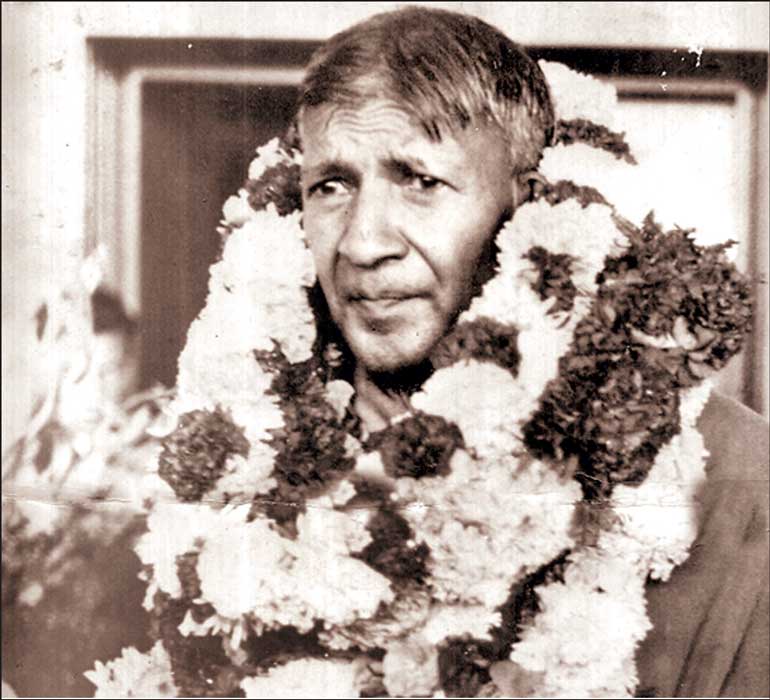
Decades after its adoption and the tragic conclusion of the armed conflict in 2009, the Vaddukoddai Resolution continues to be a central talking point in contemporary politics. It is not merely a relic of the past; it remains highly relevant because the structural root causes that triggered the resolution have still not been addressed by the Sri Lankan state. Today, Tamil people face ongoing challenges, including systemic land grab under the guise of archaeological conservation, heavy militarization of the North and East, and the denial of fundamental political rights.
Furthermore, in an era dominated by global geopolitical maneuvering in the Indian Ocean, the principle of self-determination articulated in the resolution serves as a democratic and legal anchor for Tamils. It continues to guide the Tamil national question, proving that a lasting peace on the island cannot be achieved by suppressing national identities, but only by recognizing the fundamental right of a nation to determine its own political destiny.
Book Review: A Courageous Voice from the Southern Left
Against this historical backdrop, the concise book titled "What is the Current Status of the Vaddukoddai Resolution?" written by Comrade Ranat Kumarasinghe, the current General Secretary of the Nava Sama Samaja Party (NSSP), initiates a highly significant political dialogue.
In the current political climate of Southern Sri Lanka, majoritarian chauvinistic propaganda heavily dominates, often misrepresenting the Tamil struggle for self-determination as mere terrorism or baseless separatism. In such a challenging environment, it is profoundly significant that a Sinhalese leftist leader like Comrade Ranat Kumarasinghe — who also serves as the editor of the Sinhala progressive weekly 'Haraya' — consistently raises his voice for the self-determination of the Tamil people and has penned this critical analysis.
The author clearly defines the historical role of the Vaddukoddai Resolution. He points out that the resolution must be viewed as the ultimate alternative chosen by the Tamil people to protect their existence and fundamental rights against state oppression. Evaluating the political events of the past fifty years from the perspective of class struggle and the liberation of oppressed nations, the author courageously argues that even in today's complex political climate, the "principle of self-determination" remains the only viable democratic alternative left for the Tamil nation.
The primary strength of this book lies in its ability to avoid treating the Vaddukoddai Resolution as mere dead history. Instead, the author bridges it with contemporary geopolitics and internal state dynamics. The book implicitly outlines a much-needed path on how Tamil nationalist political forces should align and march forward alongside progressive, leftist forces in the South.
Critical Perspective and Conclusion
However, from a critical standpoint, the book could have delved deeper into certain areas. It leaves room for a more exhaustive analysis of the limitations of the original resolution in the 21st century, the new socio-economic challenges faced by post-war Tamil society (such as economic marginalization and structural land alienation), and how the global imperialist order impacts, dilutes, or reshapes such historic struggles for autonomy.
In conclusion, written by a prominent figure from the South who genuinely recognizes the legitimate political aspirations of the oppressed Tamil people, this book is an essential read for progressive thinkers and those actively involved in Tamil nationalist politics. In a Southern political arena deeply mired in majoritarian chauvinism, this text reaffirms that Marxist-leftist perspectives are a historical necessity to foster solidarity between the Tamil and Sinhalese working class and to achieve true liberation for oppressed nations.
Comrade Ranat Kumarasinghe is a prominent progressive leftist leader from Southern Sri Lanka. Currently serving as the General Secretary of the Nava Sama Samaja Party (NSSP), he is also the editor of the Sinhala progressive weekly newspaper 'Haraya'. He is recognized as a courageous ideologue who consistently defends the right to self-determination and autonomy of the oppressed Tamil people from within the Southern political landscape.



0 Comments