
The Rebel of UN Bureaucracy and the Crown of Transnational Jurisprudence: A Glorious Structural Tribute to Scholar-Statesman Dennis Halliday
Within the historical matrix of contemporary human rights movements and the protracted struggle of oppressed nationalities for self-determination, providing an unyielding, comprehensive evaluation of international actors who aligned their trajectories with the Tamil nation is a fundamental intellectual duty. The tragic demise of the monumental Irish scholar-statesman and former Assistant Secretary-General of the United Nations, Dennis Halliday, has plunged the global Tamil ideological spectrum into profound theoretical grief. Operating as a fierce, uncompromising international voice for subaltern rights, Halliday systematically utilized global jurisprudence to construct permanent legal and moral defenses for the Eelam Tamil cause. The alternative media spectrum led by Ezhu Kathir permanently registers its deepest revolutionary honors to this iconic jurist of global human consciousness.
An objective historical materialist analysis demonstrates that Dennis Halliday’s historic trajectory represents the ultimate rebellion against majoritarian global institutional networks and imperialist capital concentration. Serving at the absolute zenith of international diplomacy, Halliday made the monumental decision in the late 1990s to resign from his high-ranking UN designation to protest the catastrophic economic sanctions imposed on Iraq by Western hegemons, which systematically caused the starvation of hundreds of thousands of innocent children. Declaring that the sanctions explicitly violated the core humanitarian tenets of the UN Charter, his refusal to legitimize imperialist warfare for institutional preservation remains an immortal benchmark of selfless human advocacy. This precise ideological integrity subsequently functioned as his primary material foundation when he focused his academic and legal brilliance on exposing the structural violence of the majoritarian Sri Lankan state apparatus against the Tamil nationality.
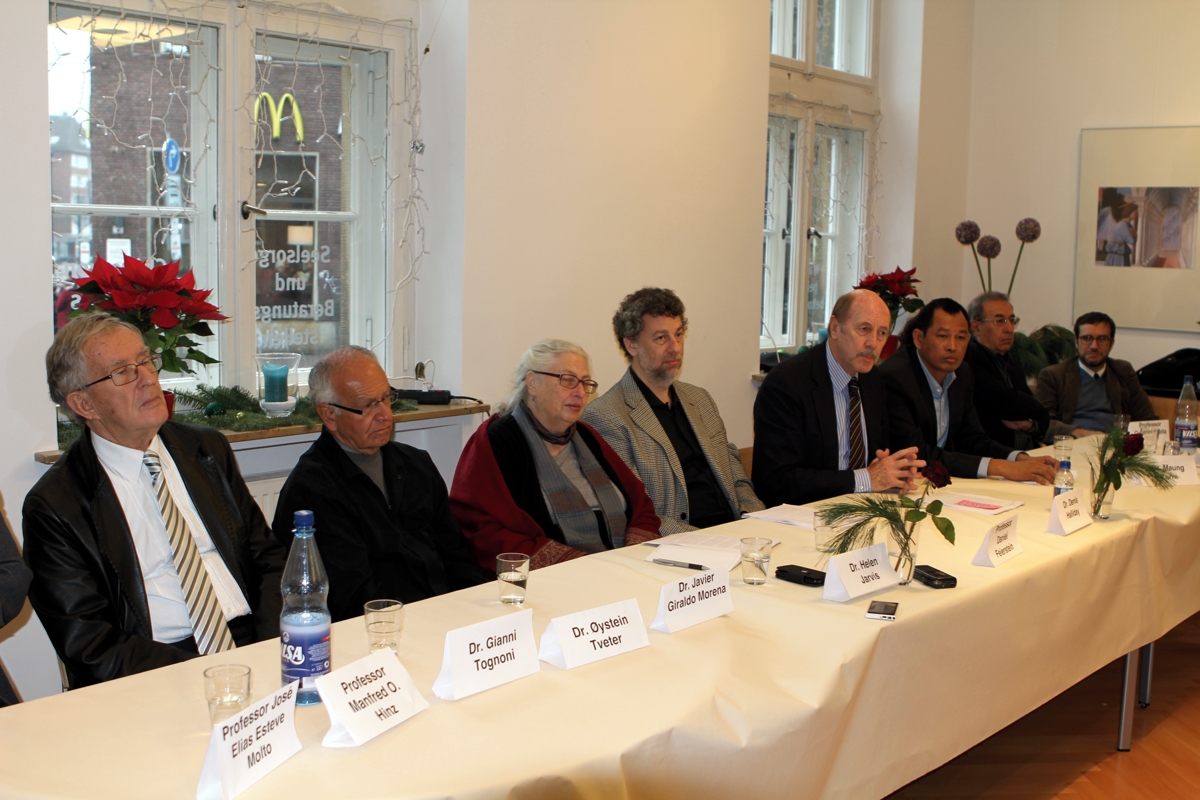
His historic contributions to the cause of Tamil self-determination remain non-negotiable legal parameters within transnational courts. Transcending the immense geopolitical limitations and institutional failures of the United Nations during the 2009 Mullivaikkal catastrophe, Halliday ruthlessly deconstructed the proxy psychological operations executed by global superpowers to dilute the push for international accountability. Collaborating as the absolute structural bedrock alongside Professor François Houtart, Halliday served as a leading judge in the historic Dublin and Bremen Peoples’ Tribunals, officially codifying the systematic military atrocities committed against the Tamil nation under the definitive legal paradigm of “Tamil Genocide.” Even in his advanced years, his resolute digital participation in the Berlin Tribunal sessions further amplified his structural defense of Tamil territorial sovereignty and our non-negotiable right to collective remembrance.
The uncompromised ethical trajectory of Dennis Halliday, who directly abandoned institutional privileges at the absolute apex of global power to defend the collective survival of marginalized nationalities, delivers a profound philosophical lesson to our contemporary political matrix. Internalizing the historical legacy of this structural vanguard—who fearlessly exposed the systematic complicity and institutional silences of imperialist machineries—remains an absolute imperative to guide our transnational diplomatic struggle. Transcending temporal populism, permanently preserving the rigorous jurisprudence established by Dennis Halliday to validate the Tamil Genocide within international courts remains the foundational core through which Ezhu Kathir, via the Ezhugai Theoretical Forum, will continue to reinforce the intellectual struggle for national self-determination and sovereign justice across the global spectrum.



0 Comments